Project-Planning-Design Exam Cram - Test Project-Planning-Design Centres
Wiki Article
BONUS!!! Download part of Actual4dump Project-Planning-Design dumps for free: https://drive.google.com/open?id=14JIEaShlLF2MN4lcyd9KNxUPNDoriCpF
Quitters never win and winners never quit. If you are determined to clear Project-Planning-Design exam and obtain a certification you shouldn't give up because of one failure. If you are willing, our NCARB Project-Planning-Design valid exam simulations file can help you clear exam and regain confidence. Every year there are thousands of candidates choosing our products and obtain certifications so that our Project-Planning-Design valid exam simulations file is famous for its high passing-rate in this field. If you want to pass exam one-shot, you shouldn't miss our files.
NCARB Project-Planning-Design Exam copyright Topics:
| Topic | Details |
|---|---|
| Topic 1 |
|
| Topic 2 |
|
| Topic 3 |
|
| Topic 4 |
|
| Topic 5 |
|
>> Project-Planning-Design Exam Cram <<
Test NCARB Project-Planning-Design Centres & Reliable Project-Planning-Design Test Voucher
Passing an exam requires diligent practice, and using the right study NCARB Certification Exams material is crucial for optimal performance. With this in mind, Actual4dump has introduced a range of innovative Project-Planning-Design Practice Test formats to help candidates prepare for their Project-Planning-Design.
NCARB ARE 5.0 Project Planning & Design (PPD) Sample Questions (Q83-Q88):
NEW QUESTION # 83
Which existing site elements are most important to locate in preparing a schematic design phase site plan for an adaptive reuse project?
- A. Structures and site improvements to be removed
- B. Utilities and services
- C. Structures and site elements programmed to remain
Answer: C
Explanation:
Comprehensive and Detailed Explanation From Exact Extract:
In adaptive reuse projects, the most important existing site elements to locate early in schematic design are those programmed to remain, as they define constraints and opportunities for design, preservation, and integration.
Structures to be removed (A) are important but secondary as they will not impact final design.
Utilities and services (B) are critical but often identified after understanding existing building layout.
Focusing on elements to remain ensures the design respects existing conditions and capitalizes on retained assets.
References:
ARE 5.0 PPD - Project Integration of Program and Systems, Adaptive Reuse The Architect's Handbook of Professional Practice, 15th Edition - Site Analysis
NEW QUESTION # 84
A new gallery is being built and requires shading elements to protect the light-sensitive artwork on display.
Which of the following are design criteria relevant to the design of shading components on the west facade of the new gallery? Check the three that apply.
- A. Annual temperature data
- B. Solar Heat Gain Coefficient of the west glazing
- C. Height of the west gallery wall
- D. Survey of adjacent building heights
- E. Spacing and depth of vertical louvers
- F. Low-E glazing on the west facade
Answer: B,C,E
Explanation:
Comprehensive and Detailed Explanation From Exact Extract:
For shading design on west facades:
Height of the wall (A): Determines the scale and proportion of shading devices.
Solar Heat Gain Coefficient (SHGC) of glazing (C): Influences how much solar radiation passes through windows.
Spacing and depth of vertical louvers (D): Controls shading effectiveness against low-angle afternoon sun.
Low-E glazing (E) helps but is glazing performance, not shading design.
Annual temperature (B) is climatic but less directly relevant.
Adjacent building heights (F) influence shading from surroundings but are secondary.
References:
ARE 5.0 PPD - Environmental Conditions and Context, Solar Control
The Architect's Handbook of Professional Practice, 15th Edition - Sustainable Design
________________________________________
NEW QUESTION # 85
Comprehensive recycling of materials from building demolition is primarily limited by which one of the following?
- A. Difficulty associated with specifying recycling requirements
- B. Technical difficulties of recycling more than 20% of demolition material
- C. Relatively high labor costs compared to cost of raw materials
- D. Lack of market for some recycled materials such as concrete and steel
Answer: C
Explanation:
Comprehensive and Detailed Explanation From Exact Extract:
Although recycling building materials is environmentally beneficial, the relatively high labor costs for sorting, processing, and handling recycled materials often limit comprehensive recycling efforts. Raw materials can be cheaper, discouraging extensive recycling unless incentives or regulations exist.
Technical difficulties (A) and market availability (D) have been improved over time.
Specifying recycling (C) is a design phase task but is not the primary practical limitation.
References:
ARE 5.0 PPD - Environmental Conditions and Context, Sustainable Design
The Architect's Handbook of Professional Practice, 15th Edition - Demolition and Recycling
NEW QUESTION # 86
An elementary school requires a renovation, selective demolition, and a major addition in order to accommodate a growing student population. An architectural firm has prepared schematic design plans incorporating the school's increased programmatic needs, including an enlarged library, cafeteria, and gymnasium; a secure courtyard; and additional space for administrative offices and classrooms. The main entrance was relocated in order to improve the traffic and pedestrian flow at the beginning and end of the school day, and additional parking was provided to comply with current zoning requirements.
The existing single-story masonry building was built in 1950. Two small additions were built later: the north addition will be kept and repurposed, but the south addition will be demolished. The building contains asbestos and lead in roof soffits, floor tiles, pipe insulation, and window paint. All existing mechanical systems need to be replaced; new systems have not been selected.
Considerations for the renovation include:
* The relocated front entrance must be easily recognizable, highly visible, and secure.
* Interior and exterior materials need to be durable and maintainable in order to withstand frequent student abuse, but also economical due to strict budget limitations.
* Good indoor air quality and increased energy efficiency are priorities for the selection of mechanical equipment.
After completion, the entire school should look uniform, without a distinctive difference between the existing building and new addition.
Building information:
* Construction Type is II-B.
The following resources are available for your reference:
* Existing Plans, including site and floor plans
* Proposed Plans, including site and floor plans
* Cost Analysis
* Zoning Ordinance Excerpts, for off-street parking requirements
* IBC Excerpts, showing relevant code sections
* ADA Standards Excerpts, showing relevant sections from the ADA Standards for Accessible Design When the addition is completed, the school will be fully sprinkled per NFPA 13 Standard for the Installation of Sprinkler Systems requirements, with a continuous 24-foot wide fire access lane provided around the building perimeter.
Through a code analysis, the combination of construction type, occupancy, and building area present a compliance problem.
- A. Check frontage area increase
- B. Reduce building area
- C. Add firewall to design
Answer: A
Explanation:
Comprehensive and Detailed Explanation From Exact Extract:
When a building's size and occupancy cause non-compliance with allowable building area or frontage requirements, the architect should first check frontage area increase provisions allowed by the code. The frontage increase can allow a larger building area based on the length of street frontage and fire access, especially when sprinklers and fire lanes are provided.
Adding firewalls (A) is a method to subdivide building area but is typically considered after exploring frontage increases.
Reducing building area (C) is a last resort if other allowances are insufficient.
Therefore, the architect should first verify if frontage area increases resolve the compliance issue.
References:
IBC Chapter 5 - Building Area and Height Limits
NFPA 13 - Sprinkler System Requirements
ARE 5.0 PPD - Codes and Regulations
NEW QUESTION # 87
The testing center on the second floor requires a private restroom for testing candidates to use. The architect needs to locate a single toilet restroom in the area that will have the least impact on the existing programming.
Click on the area in the plan where the restroom should be located.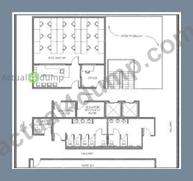
Answer:
Explanation: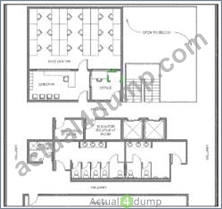
Explanation: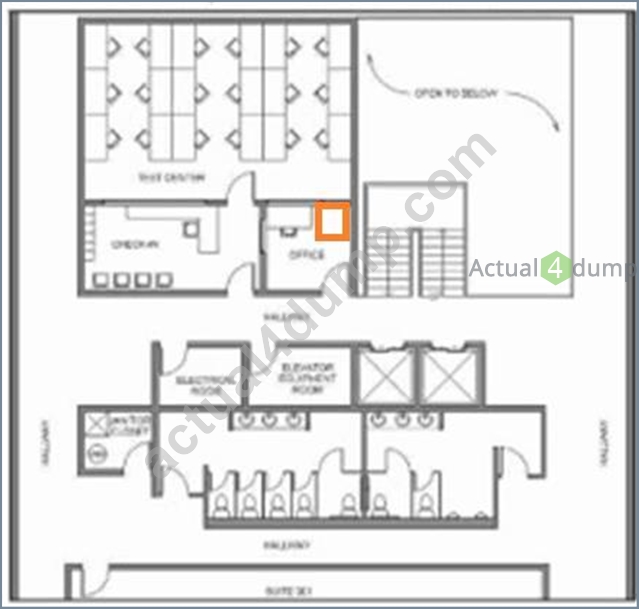
* Locating the restroom in the existing small office space minimizes disruption to testing center programming and circulation.
* This space is adjacent to the testing area, providing convenient access for testing candidates while maintaining privacy.
* Repurposing an existing small room avoids reducing seating capacity or requiring major reconfiguration of the larger testing or hallway areas.
* The location is near existing plumbing walls (bathrooms and mechanical rooms in the lower part of the plan), which reduces construction complexity and cost.
This approach aligns with NCARB ARE 5.0 Project Planning & Design content emphasizing efficient space utilization, minimal disruption, and adjacency for functional support spaces in program layouts.
NEW QUESTION # 88
......
As sometimes new domains and topics are added to the Actual4dump ARE 5.0 Project Planning & Design (PPD) exam copyright, you’ll be able to get free updates of NCARB Project-Planning-Design dumps for 365 days that cover all the latest exam topics. We provide customers instant access to all NCARB Exams Dumps right after making the payment. Our customer support team is available 24/7 to assist you with all your issues regarding NCARB Project-Planning-Design Exam Preparation material.
Test Project-Planning-Design Centres: https://www.actual4dump.com/NCARB/Project-Planning-Design-actualtests-dumps.html
- Reliable Project-Planning-Design Exam Practice ???? Reliable Project-Planning-Design Exam Practice ???? Project-Planning-Design Practice Guide ???? Search for ⮆ Project-Planning-Design ⮄ and easily obtain a free download on ⏩ www.dumpsmaterials.com ⏪ ????Project-Planning-Design Test Guide Online
- 100% Pass Project-Planning-Design - ARE 5.0 Project Planning & Design (PPD) –High-quality Exam Cram ???? Go to website ➥ www.pdfvce.com ???? open and search for ➠ Project-Planning-Design ???? to download for free ????Project-Planning-Design Authentic Exam Hub
- Frenquent Project-Planning-Design Update ???? Project-Planning-Design Authentic Exam Hub ⏪ Valid Project-Planning-Design Test Book ???? Go to website ▷ www.examcollectionpass.com ◁ open and search for 「 Project-Planning-Design 」 to download for free ????Reliable Project-Planning-Design Exam Practice
- 100% Pass Project-Planning-Design - ARE 5.0 Project Planning & Design (PPD) –High-quality Exam Cram ???? Download “ Project-Planning-Design ” for free by simply entering ☀ www.pdfvce.com ️☀️ website ????Project-Planning-Design New copyright Questions
- Excellent Project-Planning-Design Exam Cram, Test Project-Planning-Design Centres ???? Immediately open ▛ www.torrentvce.com ▟ and search for ▛ Project-Planning-Design ▟ to obtain a free download ????Valuable Project-Planning-Design Feedback
- Reliable Project-Planning-Design Exam Practice ???? Valuable Project-Planning-Design Feedback ???? Project-Planning-Design Practice Guide ???? Download 【 Project-Planning-Design 】 for free by simply searching on 《 www.pdfvce.com 》 ????Valid Exam Project-Planning-Design Practice
- Project-Planning-Design Practice Guide ‼ Project-Planning-Design Authentic Exam Hub ???? Valid Project-Planning-Design Test Book ???? Go to website ⏩ www.testkingpass.com ⏪ open and search for ( Project-Planning-Design ) to download for free ????Project-Planning-Design Test Guide Online
- Learn About Exam Pattern With Project-Planning-Design copyright ???? Search for ▶ Project-Planning-Design ◀ and obtain a free download on 《 www.pdfvce.com 》 ????Project-Planning-Design Authentic Exam Hub
- Project-Planning-Design Certification Training - Project-Planning-Design Dumps Torrent - Project-Planning-Design Exam Materials ???? Open website ☀ www.prep4sures.top ️☀️ and search for ➥ Project-Planning-Design ???? for free download ????New Project-Planning-Design Test Preparation
- Pass Guaranteed Quiz NCARB - High Pass-Rate Project-Planning-Design - ARE 5.0 Project Planning & Design (PPD) Exam Cram ???? Easily obtain free download of ➠ Project-Planning-Design ???? by searching on ✔ www.pdfvce.com ️✔️ ????Project-Planning-Design Practice Guide
- Project-Planning-Design Trustworthy Practice ⛳ Project-Planning-Design Trustworthy Practice ???? Project-Planning-Design Trustworthy Practice ???? Easily obtain ☀ Project-Planning-Design ️☀️ for free download through { www.vceengine.com } ????Project-Planning-Design Test Guide Online
- honeyawpq581003.birderswiki.com, jaspermuqe946773.cosmicwiki.com, myportal.utt.edu.tt, myportal.utt.edu.tt, myportal.utt.edu.tt, myportal.utt.edu.tt, myportal.utt.edu.tt, myportal.utt.edu.tt, myportal.utt.edu.tt, myportal.utt.edu.tt, myportal.utt.edu.tt, myportal.utt.edu.tt, deborahrnxz213072.buyoutblog.com, alyssamowj756568.blog2news.com, imogenmfjw481603.theisblog.com, directoryunit.com, janakkqt186103.levitra-wiki.com, kallumjukl848292.blogdun.com, userbookmark.com, Disposable vapes
P.S. Free & New Project-Planning-Design dumps are available on Google Drive shared by Actual4dump: https://drive.google.com/open?id=14JIEaShlLF2MN4lcyd9KNxUPNDoriCpF
Report this wiki page